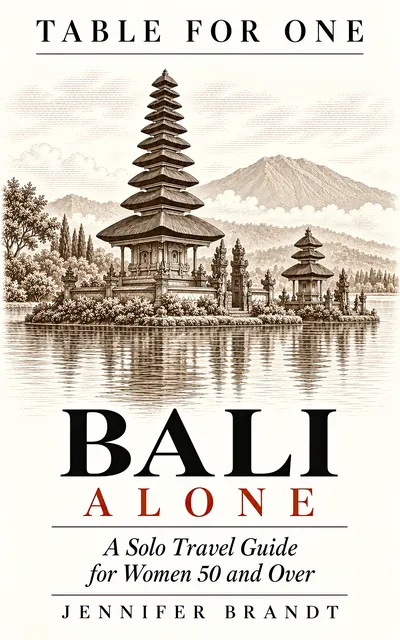
Bali Alone
Bali, with Ubud as your base.
$6.99 · EPUB ebook
Explore the guide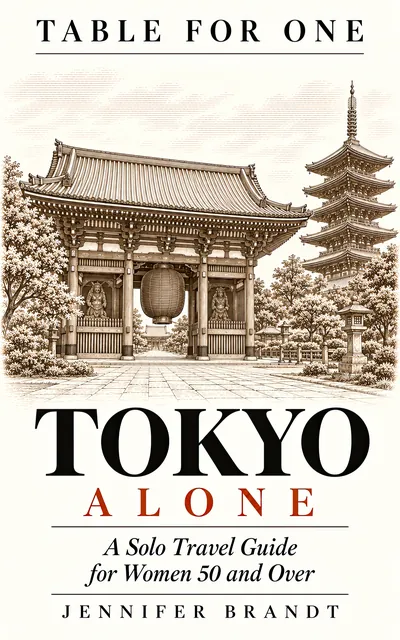
Asia · Available now
Tokyo is a federation of neighborhoods, so choose a few. Give Yanaka or Ginza an afternoon, and use the trains between walks instead of trying to cross the whole metropolis.
$6.99 ebook
Ebook · Updated Q4 2026
EPUB ebook: opens in Apple Books, Google Play Books and Kobo. On Kindle, use Send to Kindle (free, two minutes).
Or get the guide + planning kit, $9.99 →
Spotted something out of date? Tell us.
SAMPLE
Greater Tokyo holds somewhere in the range of thirty-five to thirty-seven million people across its metropolitan area, a number so large it stops being useful as a mental image. Set it aside. The Tokyo you will actually experience is a string of walkable districts, each of them sized like a modest city center, connected by a train ride of ten to thirty minutes. Shinjuku’s crowds are a fact of Shinjuku, not a fact about all of Tokyo; walk fifteen minutes off the main crossing in almost any district and the pace drops by half.
Three or four neighborhoods explored properly, such as Yanaka, Ginza and Shibuya, make a fuller week than one that tries to touch every ward. The city’s scale is a reason to choose, not a reason to hurry.
A free excerpt from Tokyo Alone.
PRACTICAL SAMPLE
Tokyo’s food is organized by neighborhood as firmly as its shopping is, and knowing what each district does well saves you eating badly near a sight.
The densest eating district at every price point is Shinjuku: the yokocho alleys by the tracks for grilled skewers, the department-store basements on the east side for a composed lunch, and the upper floors of the office towers on the west side for set lunches aimed at workers rather than visitors, which is where the value sits at midday.
Ginza rewards lunch more than dinner. The restaurants on the upper floors of the department stores and in the surrounding side streets serve set lunches at a fraction of what the same kitchens charge in the evening, which makes lunch the most economical way to eat well in Ginza. Marunouchi, on the other side of Tokyo Station, works the same way and empties out on weekends.
A free excerpt from Tokyo Alone.
Inside this book
BUY THE GUIDE
Tokyo is a federation of neighborhoods, so choose a few. Give Yanaka or Ginza an afternoon, and use the trains between walks instead of trying to cross the whole metropolis.
$6.99 ebook
Ebook · Updated Q4 2026
Instant download · Secure checkout by Payhip
Get new guides and one practical solo-travel idea every two weeks.
THE GUIDE + YOUR OWN PLANS
Includes “Settling In” as a mapped day, with Shinjuku and Shibuya weighed as bases.
See inside the Tokyo kit →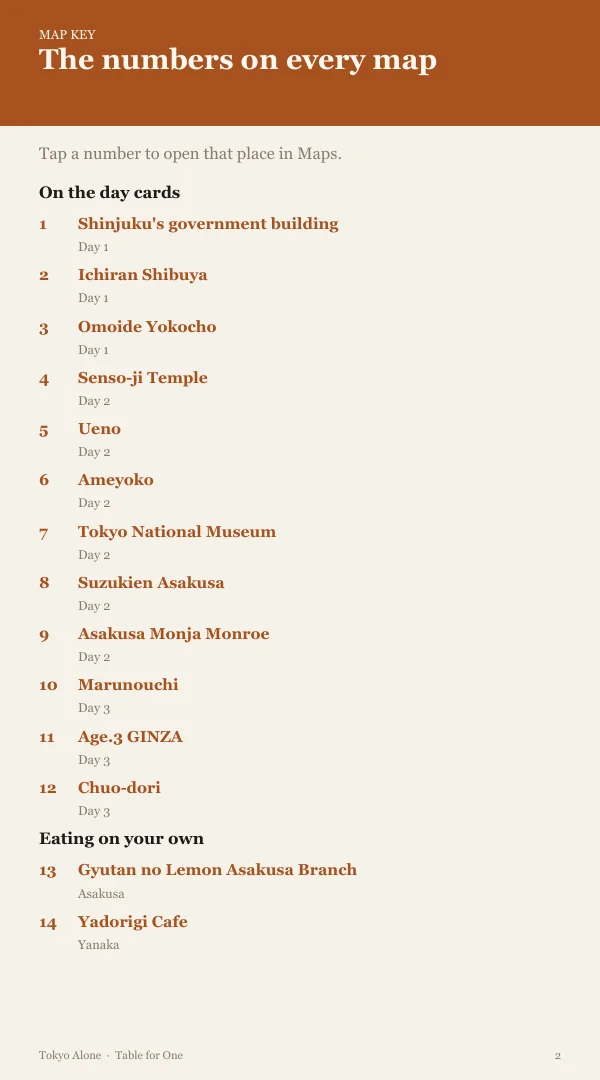 Read the free 3-page sample (PDF) →
No. The guide stands on its own. The kit is a separate, optional pack of decisions, day plans and a booking list. Read the free 3-page sample to see whether it suits the way you plan.
Bali, with Ubud as your base.
$6.99 · EPUB ebook
Explore the guide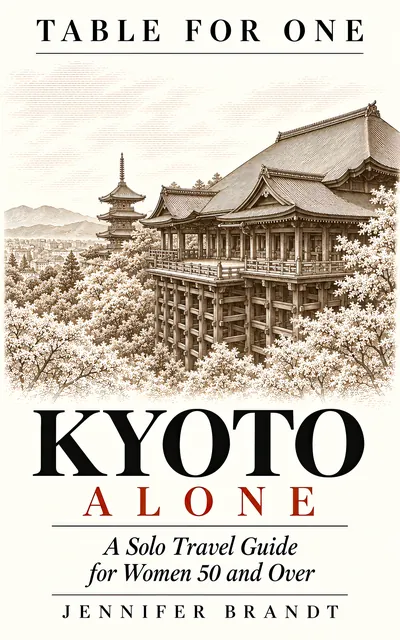
Kyoto, one counter seat at a time.
$6.99 · EPUB ebook
Explore the guide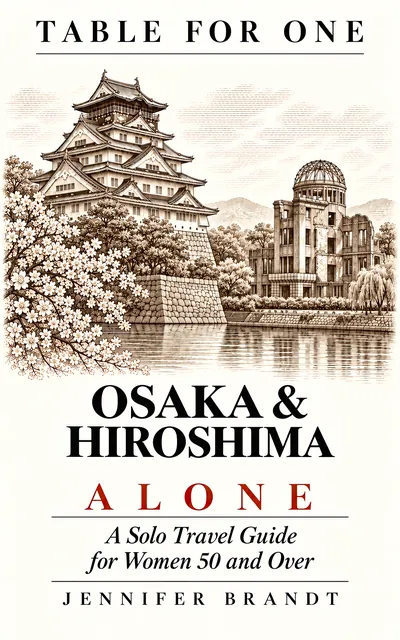
Osaka and Hiroshima, counter by counter.
$6.99 · EPUB ebook
Explore the guide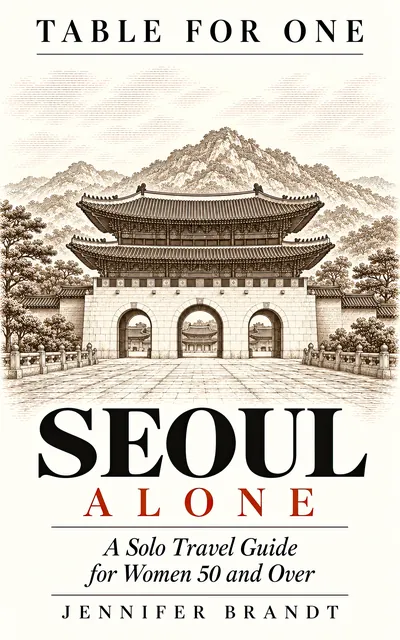
Seoul, from palaces to solo barbecue.
$6.99 · EPUB ebook
Explore the guide